
- PROTECT
Managed detection and response (MDR): how it works and who needs it
Explore how managed detection and response provides 24/7 security monitoring for small businesses that don't have their own internal security team.
Cyber6 Team · · Last reviewed · 6 min read
What is managed detection and response and why is it popular?
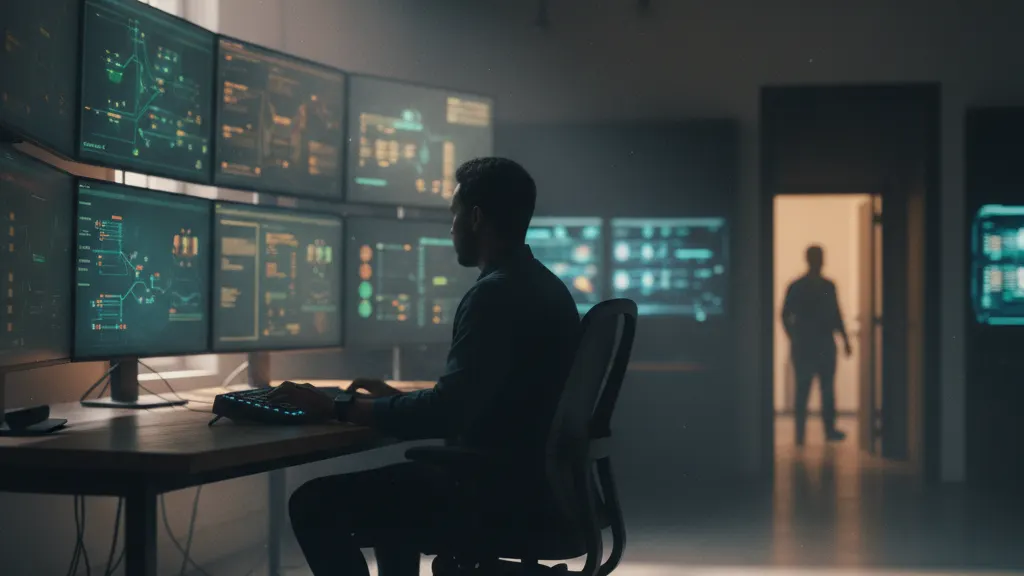
Many small business owners are finding that even the best security software is not enough. Software can send an alert, but someone has to be there to read it and decide what to do. This is where managed detection and response, or MDR, comes in. MDR is a service that combines advanced security technology with a team of human experts. These experts watch your business systems every hour of every day. If a hacker tries to get in at 3:00 AM on a Sunday, the MDR team is there to stop them immediately.
The reason managed detection and response has become so popular is the shortage of cyber talent. Hiring a single security expert can cost a business well over six figures a year. Most small and mid-sized companies cannot afford that, yet they face the same threats as billion-dollar corporations. MDR allows these companies to 'rent' a whole team of experts for a fraction of the cost of one full-time employee. It gives you enterprise-grade protection without the enterprise-grade payroll.
How an MDR service works day-to-day
An MDR service starts by installing sensors on your computers, servers, and cloud accounts. These sensors feed data back to a central Security Operations Center. The software uses artificial intelligence to scan through millions of events, looking for anything that looks like an attack. When the software finds something suspicious, it creates an alert. In a typical business, that alert might sit in an inbox for days. In an MDR environment, a human analyst reviews that alert within minutes.
- Triage: The analyst determines if the alert is a real threat or just a mistake (a false positive).
- Investigation: If the threat is real, the analyst looks at what the hacker was trying to do.
- Containment: The analyst takes action to stop the threat, such as locking a user account or isolating a computer.
- Remediation: The team provides clear instructions on how to fix the underlying problem so it doesn't happen again.
Solving the problem of alert fatigue
If you have ever managed an IT system, you know that security tools can be very noisy. They send alerts for everything: a new software update, a forgotten password, or a child playing a game on a parent's work laptop. After a while, IT staff start to ignore these alerts. This is called 'alert fatigue,' and it is how most major breaches happen. A hacker gets in, the system sends a warning, but the warning is buried under a pile of junk mail. Managed detection and response solves this by doing all the filtering for you. Your team only hears from the MDR provider when there is something important that needs your attention.
Who needs managed detection and response?
Not every business needs an MDR service, but it is becoming a standard for several groups. If you handle patient health records, you likely need MDR to meet high data protection standards. If you are a government contractor, new regulations often require continuous monitoring. Even if you are not regulated, if your business would fail if you couldn't access your data for 48 hours, MDR is a wise investment. It is the best insurance against the high cost of downtime caused by ransomware.
Another group that benefits is the over-worked IT manager. If you have one person handling all your tech support, they do not have time to be a security expert as well. MDR takes the weight of security off their shoulders, allowing them to focus on helping your team be productive and keeping your systems running smoothly.
Choosing the right MDR provider
When looking at MDR providers, ask about their 'time to respond.' A good provider should be able to acknowledge a critical threat in under 20 minutes. You should also ask if they just send you a report or if they actually take action to stop the threat. Some services are just 'managed detection'—they tell you that you're being robbed but don't call the police. You want the 'response' part of MDR, where the provider actively blocks the hacker for you.
- Evaluate your current IT team's capacity to handle security alerts at night and on weekends.
- Review your industry regulations to see if 24/7 monitoring is required.
- Compare the cost of an MDR service against the cost of a single full-time security hire.
- Ensure the provider offers protection for your specific cloud tools like Microsoft 365.
- Ask for a sample report to see how they communicate threats to their clients.
The value of a security partnership
MDR is more than just a tool; it is a partnership. Your provider gets to know your business and your 'normal' behavior. Over time, they help you strengthen your defenses and reduce your overall risk. This continuous improvement is what keeps a business safe in the long run. In a world where cyber attacks are constant, having a team of experts in your corner is the best way to ensure your business remains resilient.
What to do next
- 01Ask your current IT provider how they handle security alerts that occur after hours.
- 02Calculate the potential cost of 48 hours of business downtime due to a cyber incident.
- 03Schedule a demo with an MDR provider to see how they monitor cloud and endpoint systems.