
SOLUTION · IT & CYBERSECURITY
Email and wire fraud.
A convincing email asks for a bank change or a wire, and one busy person acts on it. Cyber6 filters out lookalike senders, requires a phone check before money moves, and trains the people who touch payments to pause on the right message.
Cyber6 is an AI & technology partner: we automate the work slowing businesses down, protect them with IT & cybersecurity, and train their people.

WHAT'S REALLY HAPPENING
How a fake email turns into a real wire out the door
It rarely looks like a scam. It looks like a normal invoice, one day early or one letter off.
STEP 01
An attacker studies the business
Vendor names, invoice timing, and who approves payments are pulled from a website, LinkedIn, or an old data leak.
STEP 02
A lookalike domain goes live
One letter changes, an 'l' becomes a '1', or the vendor's real account is taken over outright.
STEP 03
A routine-looking message arrives
An invoice, a payment reminder, or a notice that bank details changed, often timed to a deadline or a closing.
STEP 04
Someone acts under pressure
Trying to be responsive, a bookkeeper or office manager updates the account or sends the wire without a second check.
STEP 05
The money is gone
Funds move to the attacker's account, and by the time anyone notices, recovery depends on speed nobody had.
WHY IT HAPPENS
Four gaps let one email move real money.
Select a cause to see the problems it creates on your team.
- No phone check on payment changes: A bank-detail change gets accepted by email alone, with no call to a number the business already has on file. Leads to: Money sent out, Insurance disputes.
- Lookalike senders reach the inbox: Without filtering built for one-letter-off domains and spoofed display names, a fake message looks exactly like the real vendor. Leads to: Money sent out, Repeat attempts.
- One person can approve a wire alone: Without a required second sign-off, a single rushed decision becomes a completed transfer. Leads to: Money sent out, Slow recovery attempts.
- Staff have never seen a real example: Without practice spotting a lookalike domain or a pressure tactic, the first time someone sees this fraud is the time it works. Leads to: Repeat attempts, Damaged relationships.
A bank-detail change gets accepted by email alone, with no call to a number the business already has on file.
Money sent outInsurance disputes
WHO IT HITS HARDEST
Where email and wire fraud hits the hardest.
SCENARIO
Bookkeepers and office managers
They approve payment changes fast, under pressure, with no easy way to double-check a request that looks routine.
Bookkeepers and office managers
They approve payment changes fast, under pressure, with no easy way to double-check a request that looks routine.
Real estate
Closing funds are a frequent target, since the amounts are large and the timeline is tight.
Industry pageLaw firms
Client trust funds and settlement payments make firms a common target for this fraud.
Industry pageConstruction
Large payments to subcontractors and suppliers are easy to redirect with one convincing email.
Industry pageAccounting and tax firms
Clients and vendors send payment details by email every day, especially during tax season.
Industry pageSIGNS THIS IS HAPPENING TO YOU
Six questions show how exposed you are to this fraud.
One question at a time. The gauge moves as you answer.
Can vendor bank details be changed by email alone?
EXPOSURE
0 gaps so far
This runs in your browser only. Nothing you choose is sent anywhere.
WHAT IT'S COSTING YOU
One wire adds up to more than the money.
LINE ITEM
CATEGORY
- 01MONEY
Money sent to the wrong account
Wire transfers are hard to reverse. Once funds clear at the receiving bank, recovery depends on speed and luck.
- 02REPUTATION
A damaged vendor or client relationship
A client whose closing funds were redirected remembers who they were working with, even when the business wasn't at fault.
- 03TIME
Staff carry the blame
The person who sent the payment often feels responsible, even though the message was built to fool anyone.
- 04TIME
Time lost chasing the bank
Recovering funds, if possible at all, means hours with your bank, the receiving bank, and sometimes law enforcement.
- 05COMPLIANCE
Insurance disputes
Some cyber and crime policies limit coverage for wire fraud unless specific verification steps were followed.
HOW CYBER6 FIXES IT
One process stops the email before it becomes a wire.
IT & Cybersecurity does most of the work here. Training closes the gap around it. Select any piece to see what it does.
IT & CYBERSECURITY
Catch the lookalike sender
Email filtering flags domains one character off from a real vendor, along with newly registered domains and spoofed display names.
WHAT IT MEANS FOR YOUThe fake email is far less likely to reach an inbox at all.
TRAINING
- IT & CYBERSECURITY: Catch the lookalike sender. Email filtering flags domains one character off from a real vendor, along with newly registered domains and spoofed display names. The fake email is far less likely to reach an inbox at all.
- IT & CYBERSECURITY: Make stolen logins useless. MFA goes on across email and finance systems, so a stolen password alone can't get an attacker into a mailbox. Even a compromised password doesn't hand over an account.
- IT & CYBERSECURITY: Build a payment verification step. Any bank-detail change or new wire request gets confirmed by phone, using a number already on file, not one in the email. One phone call catches almost every version of this fraud.
- IT & CYBERSECURITY: Require a second approval. For wires and large payments, a second sign-off inside your accounting or banking software stops one person acting alone. A rushed decision by one person doesn't become a completed transfer.
- TRAINING: Train the people who touch money. Finance-team training focused on this fraud: what a lookalike domain looks like, what pressure tactics sound like, and what to do when something feels off. A bookkeeper becomes the person who catches it, not the person who missed it.
- TRAINING: Practice with realistic simulations. Simulated fraud attempts mimic real tactics, like a fake vendor bank-change email, then get reviewed with the team without blame. Your team sees a fake before the real one arrives.
WHAT'S INCLUDED
Everything we set up, in the order we set it up.
Six pieces, set up in this order during your first weeks.
01
Email filtering
Filtering tuned to catch lookalike domains and spoofed display names before they reach an inbox.
02
MFA rollout
Multi-factor authentication turned on across every mailbox and finance system.
03
Verification process
A written rule: any payment change or new wire is confirmed by phone on a known number.
04
Second approval
A required second sign-off for wires and large payments inside your existing accounting tools.
05
Finance-team training
Sessions built around what this fraud looks like, not generic security advice.
06
Simulated fraud attempts
Realistic test attempts, reviewed with the team in plain language afterward.
BEFORE AND AFTER
A payment request, two ways.
| A typical Monday without Cyber6 | A typical Monday with Cyber6 |
|---|---|
| Bank detail changes accepted by email alone | Every change confirmed by phone on a known number |
| One person can approve a wire | A second person signs off on large payments |
| Lookalike domains land in the inbox | Lookalike and spoofed senders flagged before delivery |
| Passwords are the only protection on email | MFA required on every mailbox |
| Staff have never seen a real example | Staff have practiced spotting one |
| No agreed process when something feels off | A clear, known step: stop and verify |
| Recovery depends on luck | A response plan starts the moment something looks wrong |
NO PROTECTION IS PERFECT
If a fraudulent payment goes out anyway
No filter catches everything. What matters is how fast it's caught and how the bank is contacted.
- 1
Detect
The bank, your team, or monitoring flags a payment that doesn't match the verification process.
- 2
Contain
We help you contact your bank immediately to attempt a recall and lock down the affected email account.
- 3
Recover
We work with you, your bank, and law enforcement on next steps, though recovery of sent funds is not guaranteed.
- 4
Report
We help you document what happened for your insurer, your bank, and, if required, regulators.
- 5
Prevent
We review the gap that let it happen and close it, whether that's a missing phone check or a missing second approval.
WHAT WE MEASURE
Three numbers you'll see every month.
We record a starting point during onboarding and report on these every month.
EVERY MEASURE IS TRACKED THROUGH THE CYBER6 PROVE FRAMEWORK
- Plan the goals
- Record the baseline
- Operate and observe
- Verify the results
- Evolve
PLAN THE GOALS
Lookalike senders blocked
How many spoofed or lookalike messages were filtered before reaching an inbox.
RECORD THE BASELINE
MFA coverage
The share of mailboxes and finance accounts with multi-factor authentication active.
OPERATE AND OBSERVE
Simulated fraud attempts caught
How many staff correctly reported a simulated fraud attempt instead of acting on it.
IN YOUR INDUSTRY
What changes in your industry
BEFORE
Closing funds are redirected the day before a sale, and nobody called to confirm the new account.
AFTER
A phone-verification rule catches the fake bank change before the wire ever goes out.
Real estate pageWHY CYBER6
Why Cyber6 for wire fraud
01
Filtering built for lookalikes
Email security is tuned to catch domains that are one character off, not just obvious spam.
02
A phone call, not a policy nobody follows
The verification step is simple enough that finance teams actually use it every time.
03
Training built on real tactics
Simulations mimic what this fraud actually looks like, not generic phishing examples.
04
One partner for the filter and the finance controls
The same team that manages email security also helps set up the approval and verification steps around it.
QUESTIONS
Questions people ask
Sometimes, if you catch it within hours and the funds haven't moved again. Recovery is not guaranteed, which is why prevention matters more than response.
No. Attackers often target smaller businesses because the same fraud can succeed with less sophistication and less oversight.
This is common and still your risk. Verifying any bank detail change by phone protects you even if the vendor's account is the one that was taken over.
Just the moments that matter: any request to change bank details, and any new or unusual wire. Routine payments to known accounts don't need extra steps.
It adds a few seconds to logging in. Most people stop noticing it within a week.
Call your bank immediately and ask about a wire recall, then contact us and your insurer. Speed matters more than anything else.
Training alone won't catch everything, which is why we pair it with technical filtering and a required verification step. Together they cover far more cases than any one layer alone.
Most existing policies aren't checked in the moment. We help build the step into the actual payment process, not just a document nobody opens.
WHO WE'VE WORKED WITH
- A statewide cybersecurity assessment program
- Credit unions
- A water and wastewater utility
- Housing organizations
- Nonprofits and churches
- Small businesses
- A health and wellness startup
Every result is measured against your own starting point.
How we prove it →PART OF ONE PARTNER
One partner for all three.
Protect · IT & Cybersecurity
IT and cybersecurity, managed around the clock.
You're here
Empower · Training for Businesses & Individuals
Training that builds skills for your team and your career.
Explore Empower
WHY CYBER6
Why businesses choose Cyber6.
One partner, not three vendors
The people automating your work also run and protect your IT and train your team, so nothing falls between companies.
Plain language and real people
You talk to people who explain things clearly, answer the phone, and tell you what they'd do in your place.
Measured against your own numbers
We record where you start before anything changes, then report results against that baseline.
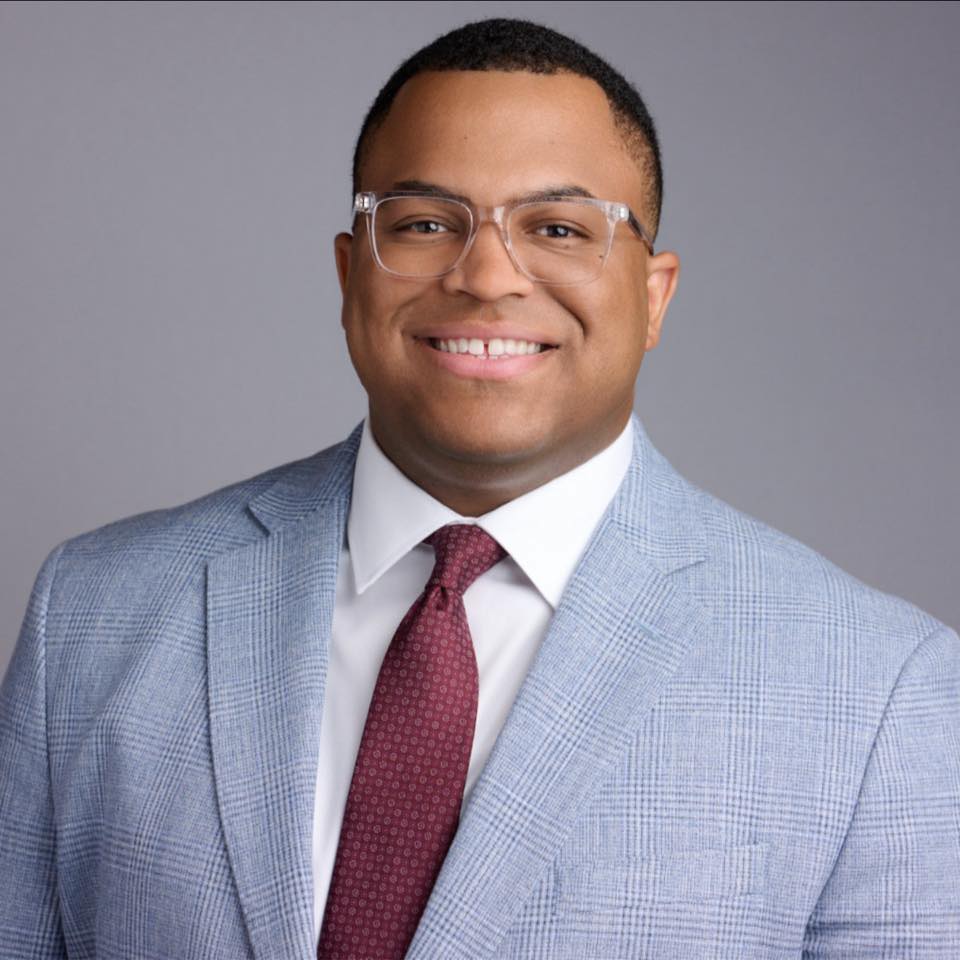
Marquis Carroll, Founder & CEO. Marquis has spent years doing hands-on IT and security work through his own business, and runs a mentorship program that has helped people start careers in tech.
Our storyGETTING STARTED
Four steps from first call to results.
Explore
A relaxed 30-minute conversation about how your business runs and what's getting in the way. No cost, no pressure.
You get: honest answers on whether we can help.
Assess
We look at your systems, security, manual work, and training needs, and record your starting numbers.
You get: a plain-English picture of your risks and opportunities.
Set up
A prioritized plan and proposal, then a kickoff that introduces your team and sets up access safely.
You get: a shared timeline and who to call for what.
Enable
We roll out in phases, train your team, and walk you through your first results.
You get: your first plain-English report, measured with PROVE.
Let's put a phone call between your money and a fake email.
A 30-minute call. No cost, no pressure, and honest answers.